Chinampas: waterways of wealth and traditional knowledge
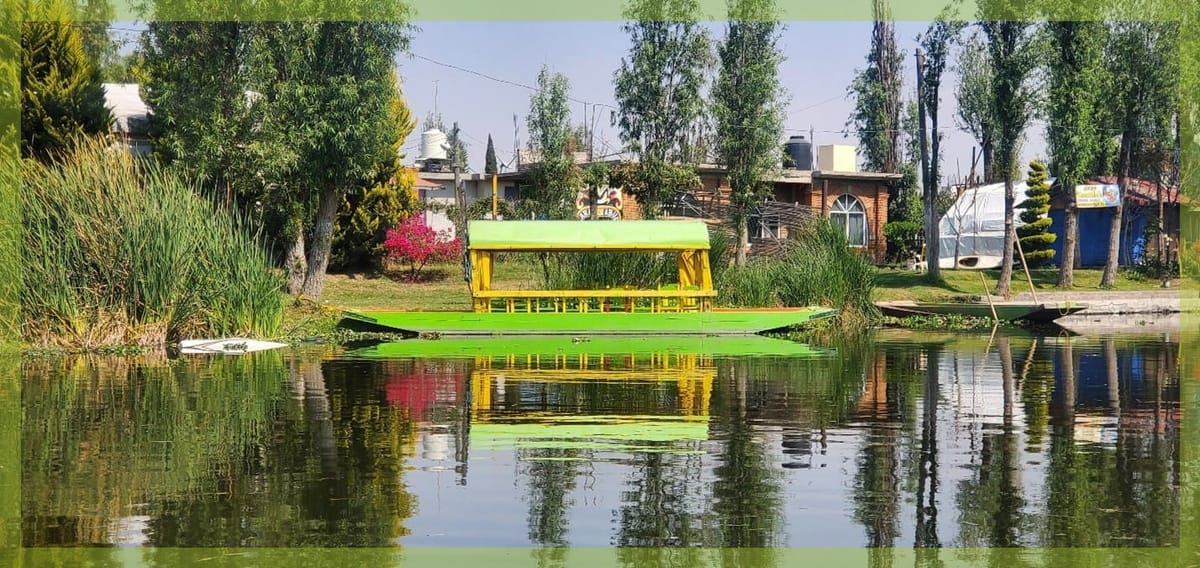
Tláhuac, Mexico - February 2025
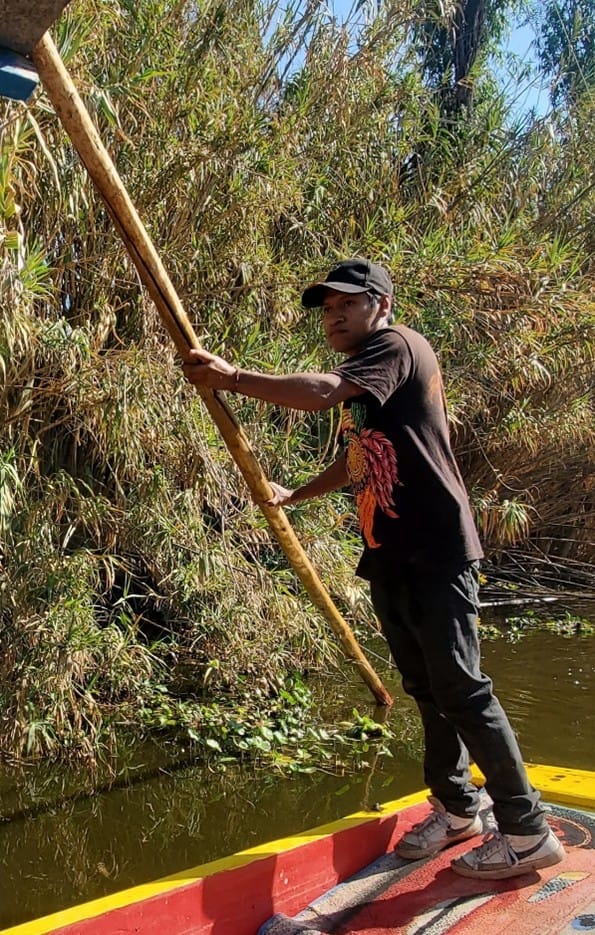
The only word I hear Martín say throughout our boat ride along the Chinampas of Tláhuac is “hola”. He is a quiet, even presence throughout, the force that propels us along timeless plots of floating gardens and farms. Of everyone on this journey, he is the most interesting person on the boat to me.
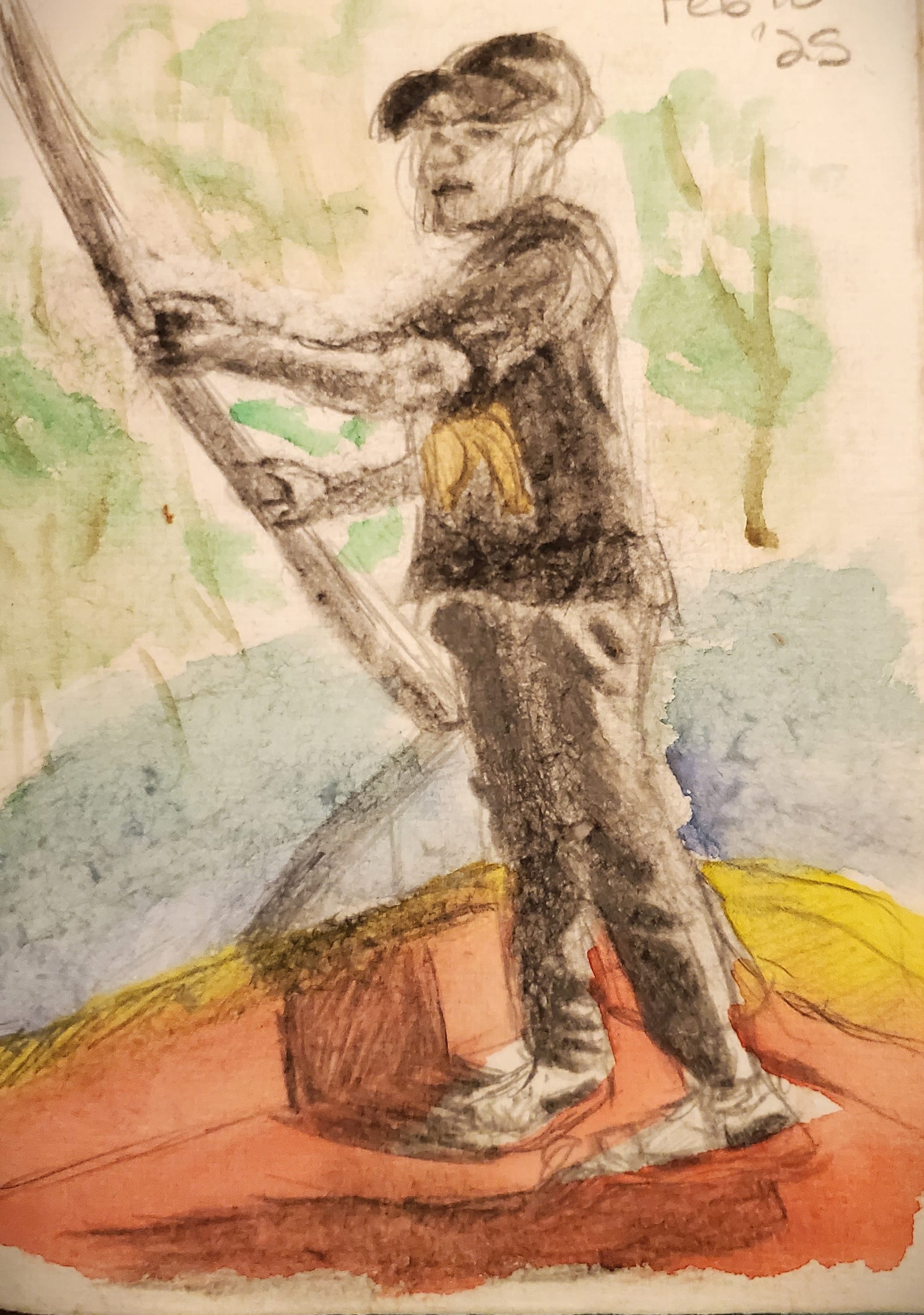
I snuck glances as often as I could, marveling at how one man could steer a long wooden vessel filled with seventeen people using nothing but a large wooden pole to navigate the waters.
As we snacked on café de olla, pan dulce and té de canela, voices filled the air in an ebb and flow like water lapping the shore. Martín hoisted himself across the hull of the boat, from ledge to ledge to cut across corners and wind through narrow channels. I imagine for such a smooth ride, one needs incredible stamina, grace, and calm patience.
I don’t know anything about Martín. I don’t know if this is all he does, or if this is one of several tasks he manages on a day-to-day basis. I so wanted to ask him if this kind of exertion feels exhausting, or if there is a rhythm to it that he has figured out. I want to ask how many times a day he does this for tourists.
I never quite get the chance.
We are lazily cruising through a canal that was the engineering genius of the Aztecs or Mexicas from over a thousand years ago. This is how they built fertile land to feed a population on what would have otherwise remained a large swatch of lake.
The chinampas began as a thatched fences of reeds upon the shallow lakes. They eventually took on bits of soil and aquatic plant life that over time created floating plots of rich soil used to grow staple crops. Rather than having to divert water for irrigation, this agricultural method drew water from the canals to irrigate crops. The method was sustainable and supported the developing Mexica empire as it grew.
Today, our guide tells us, that the chinampas of Tláhuac especially are akin to the lungs of the populous metropolis of Mexico City. In such an arid climate, the chinampas allow the land to breathe and the produce grown from this area supplies the city with organic and local food.
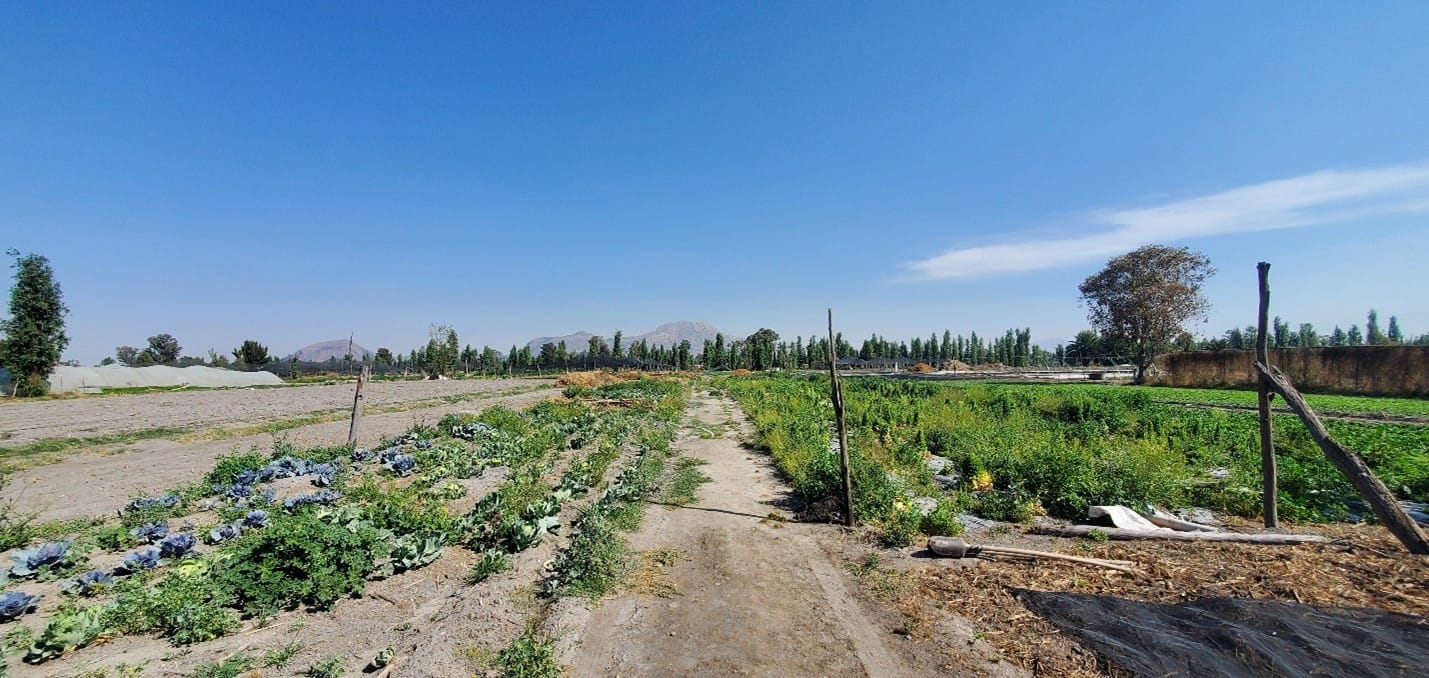
Martín rows us all the way up to a small family farm, which takes up about half a section of one of the squared off sections of the floating garden. The other half belongs to another farmer.
Vicky, the owner of this plot, meets us as we disembark the boat. She has on a straw hat and knee-high rubber boots. She comes from a long line of farmers, and shares ownership of this farm with her brother. They manage the entire plot on their own, growing lettuce and cabbage, broccoli, squash, nopal, and a variety of other vegetables. Her farm does not use any chemicals and follows the same cultivation practices that date back to the beginning of chinampa farming. One of these techniques is a nursery method which allows seeds to sprout in a small, protected section, and be removed from the soil easily without hurting the shoot’s integrity.
Their fertilizer consists of canal water and manure which nourishes the diversity of crops that together create a healthy ecosystem. Vicky says her children help from time to time, but like many youth of their generation they have their sights set elsewhere. They do however help bring students to the farm for environmental education opportunities. She says she feels rich in being able to work the land, to be able to provide fresh, healthy food. Even more, her fulfillment comes from living out her identity and culture through these practices.
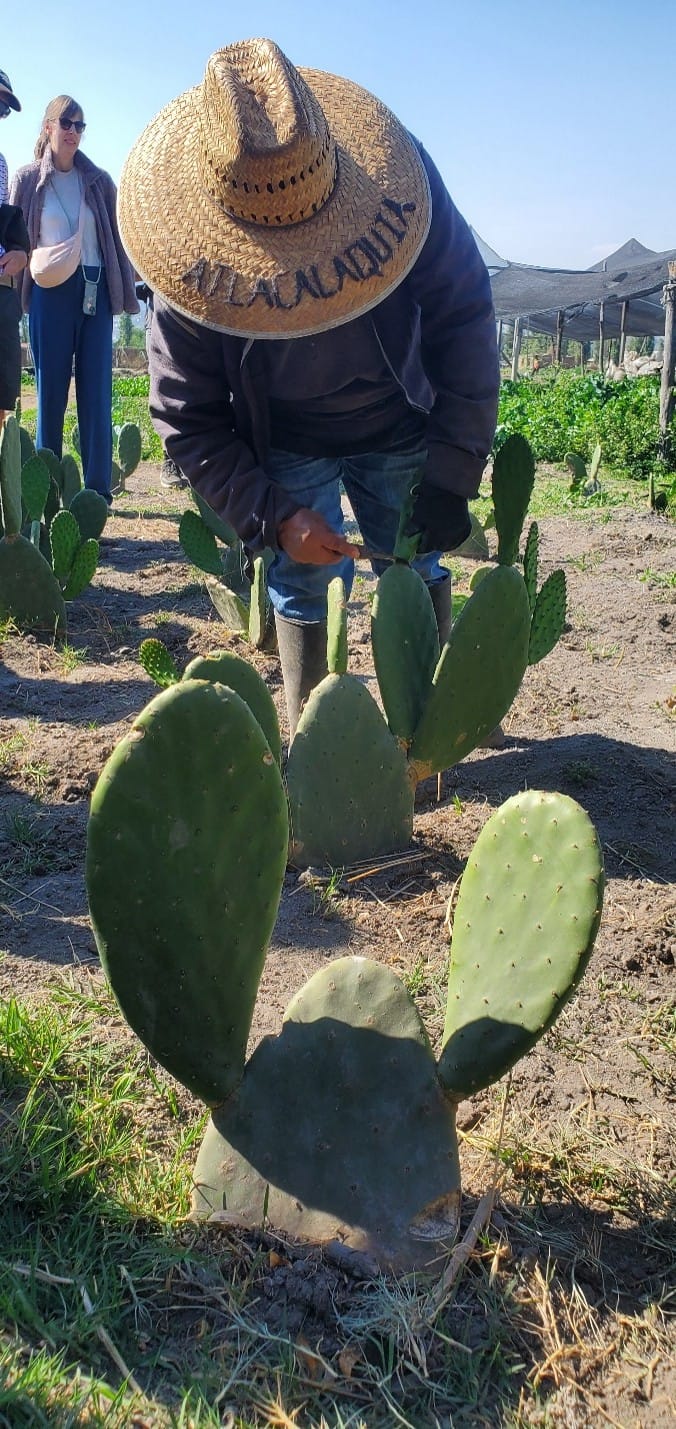
This is a kind of wealth no amount of money and financial investment can buy. It strikes me the term generational wealth - a term used to evaluate economic systems on equity, access and justice - gets too often linked solely to monetary things like money and financial investments.
But this is also generational wealth.
Here, it is not just about land but about knowledge. Vicky has the wealth of knowing and understanding ways of coaxing earth into a bounty that go back several hundred years. She and her family continue to work with the land in a way that uses no chemicals and leaves a very small footprint. A sustainable practice that is abundant because it is replicable and passed on from generation to generation.
Vicky’s roots are intertwined with a legacy that has persisted in relation to the land and soil. The lifestyle of the chinampas isn’t just an environmental sustainability goal or feat, it is a culture, a way of being, an ethic of living. As the climate changes and the environment shifts in response, culture, lifestyle and ecological heritage too will be susceptible to change.
This interconnectedness will echo- across time and space. People are still finding ways to keep their age-old traditions alive even as a unique colonial Mexican culture has taken root after more than two hundred years of independence. The persistence of Indigenous lifestyles and philosophies is present and visible alongside the influences of Catholicism and Spanish colonialism.
The terms and names of places – Tláhuac, Xochimilco, Tenochtitlán, the term Chinampas – are all Nahuatl terms. A reminder that Indigenous languages survive alongside Spanish and are still the primary languages for many communities. The wealth of cultures and lifestyles still braided with the land is a testament that even a complicated and brutal history of conquest cannot wipe out the soul of a people.
There is always someone, somewhere, continuing to kindle the smoking embers of tradition back to a flame. People like Vicky, keeping her family farm afloat without sacrificing ancestral knowledge. Someone like Martín, propelling everyone forward with the might of their own muscles. A quiet kind of pride.
This was Issue 2 of Micromoments. If you made it this far, I hope you had some tea with you and had some kernel of a thought, or reflection that came to mind.
This newsletter is one big experiment. I welcome your thoughts, suggestions, reflections and questions/concerns any time. Please feel free to reply to this newsletter at any time. I'll be waiting on the other side! - Kamna