When the Seas Change
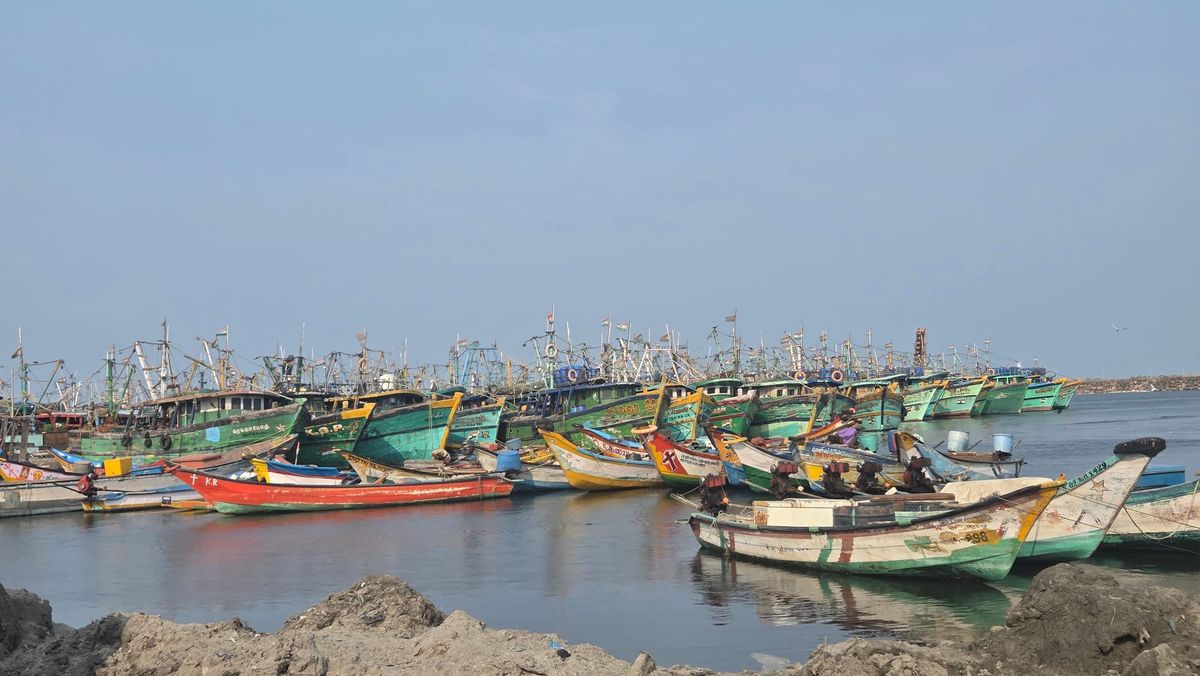
Chennai's Kasimedu Harbor and the Tensions of a Changing Economic Landscape
Chennai, Tamil Nadu India - March 2026
Note: After sending out Chinampas, from issue 2 of Micromoments, I received a couple comments about the idea of generational knowledge as wealth. One reader asked me a question.
What did I think about that tension about youth shifting away from family vocations?
I have no qualifications to answer that, but her question about this economic tension had already been sitting with me. This pattern is everywhere, across vocations, across countries. Most recently, it came up directly during a visit to one of Chennai’s oldest fishing harbors. This is what we explore today.
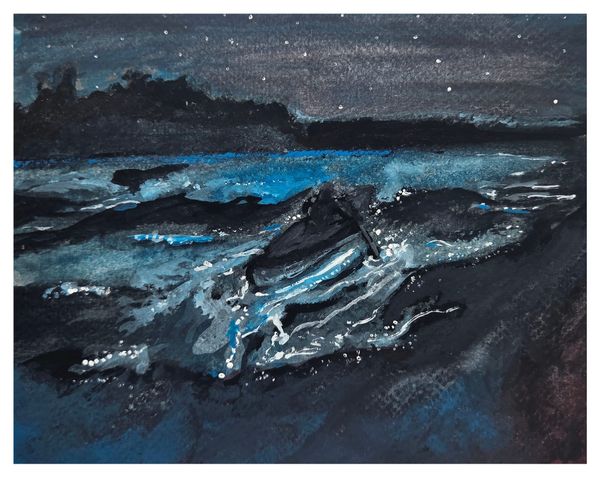
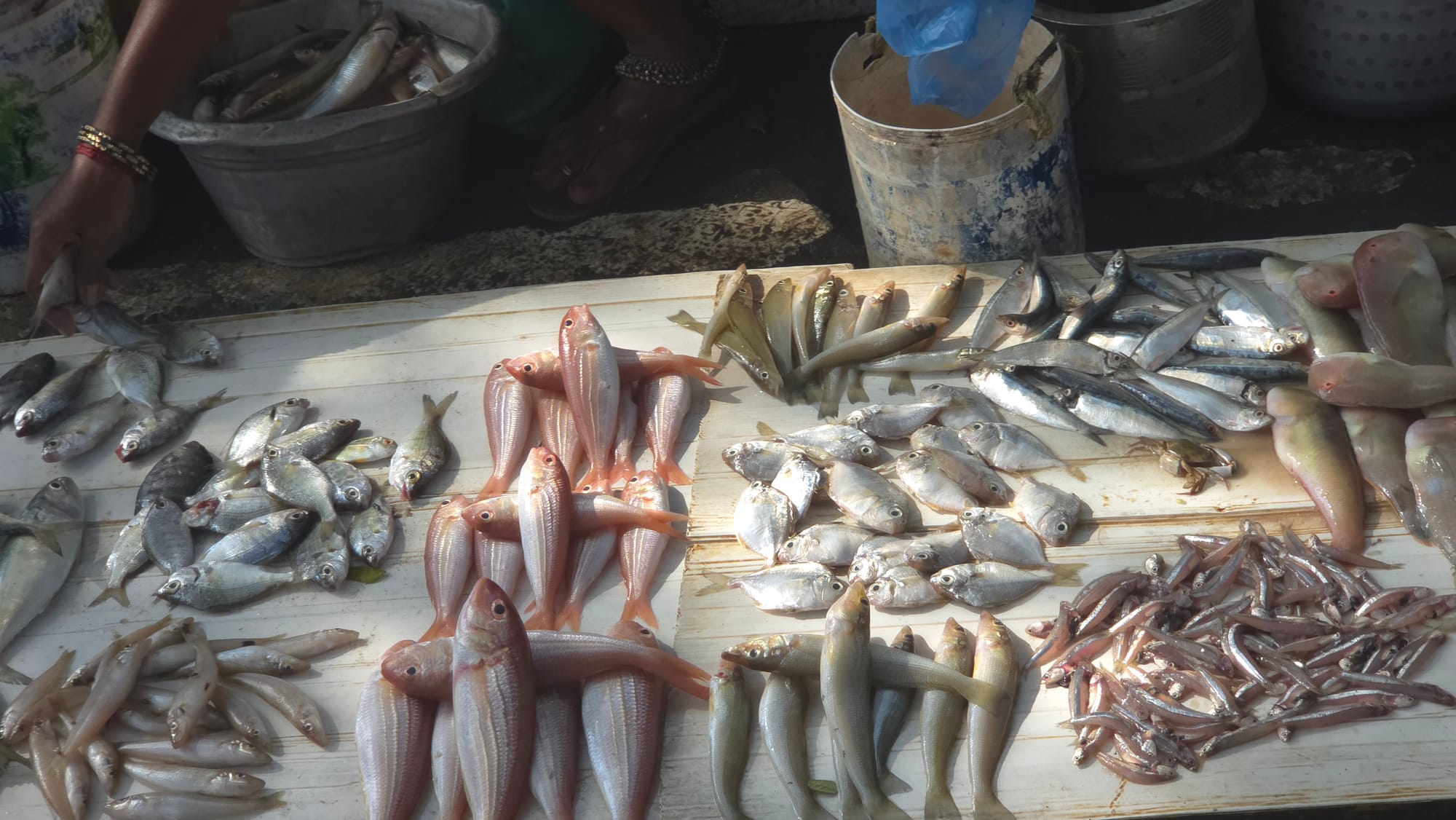
Salty, putrid, the scent of dried fish and sea brine. Fiber boats painted with peeling aqua paint bob up and down along the docks. On this Sunday afternoon, Chennai’s largest fishing harbor is quiet. It is the end of March, about half a month out from the beginning of India’s nationwide annual fishing ban and catches have already been miserably low.
I am on a tour with Madras Inherited, a heritage organization that curates oral histories and on the ground research to bring us the undocumented stories and folklore of this community.
Our lead storytellers today, Ashmitha and Shruthi, introduce us to Shankar anna, a fifty-four year old fisherman wearing a button down shirt, tucked into a colorful lungi that ripples in the off-shore breeze. He wears a watch that glints in the light and has a crisp haircut.
Shankar anna tells us about many things.
About what it was like at the end of 2004 when the Indian Ocean tsunami swept away thousands of people on this very coast.
About how the community has built their own app to check the weather and alert one another to changes or emergency alerts.
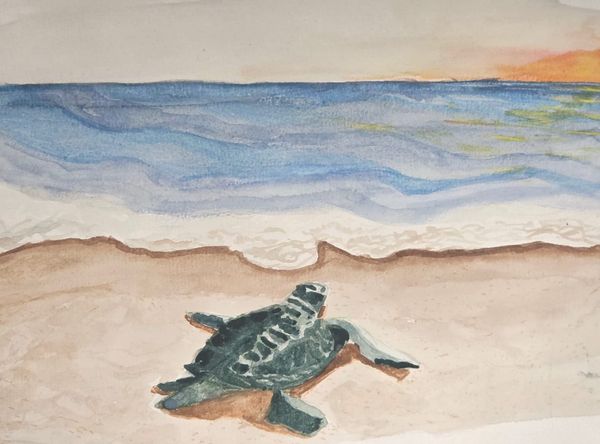
About being caught between sustainable practices and the subsidies that support trawlers who go out farther into the sea, put out larger nets for high yield fish and end up catching endangered creatures like the Olive Ridley Seat turtle.( It turns out the same government providing subsidies to trawlers are also supporting efforts to conserve species like Olive Ridley.)
“Who did you learn fishing from?” asks one of the group members, a vocal man who often talked over our guides with enthusiasm.
“From my father,” says Shankar anna.
“What about his kids, and the next generation? Do you teach them?"
‘We don’t bring them here. We keep them at home and make sure they go to school,” he responds.
“What about your children?” another man next to me asks.
A beam of light glows from Shankar anna’s face. He says through a smile that his son works in IT.
Anyone who has grown up on the coast, where sand meets ocean, knows the salty scent of the sea can go from pleasant to pungent quickly. Kasimedu fishing harbor isn’t too distant from the likes of the harbors I grew up around in Seattle's Puget Sound region. No matter where we go in this world, maritime fishing traditions reach as far and wide as oceans do.
The Indigenous inhabitants of the Puget Sound were - and still are - fisherfolk too, whose lives and foodways are deeply entangled with the rivers, lakes, and inlets of the region. Keystone species like salmon are considered sacred, and this millennia long relationship is at the heart of some of the most heated environmental movements in the Pacific Northwest.
An ocean away in Chennai, where my mother grew up, Indigenous communities are also people of the sea . Before the British East India company arrived on Tamil Nadu shores, these communities were skilled in tying wood together to create sturdy, reliant floating vessels called Kattu Maram. What we know now as the catamaran.
These communities are multireligious, and though their faiths may have different symbols, they all revere Kadal Amma, the goddess of the sea. There are rituals – from full pujas to small gestures like removing the cloth men tie around their heads while hauling their boats out to sea – that are offerings of reverence for Kadal Amma’s bounty and her wrath.
Fishing nets, which were once a result of a whole family’s labor and handiwork, are considered so sacred that to this day fishermen will only walk on the nets barefoot. The folk songs that come from this community and their work are teeming with meaning and movement that mimic water. In the Tamil folk music originating from these communities – called amba paatu – you’ll hear the rhythmic call of “yelo, yelelo”. These words correspond with the literal push and pull of oars through the water. Yelo, for pushing the boat out, and lelelo for pulling the boat in.
The fishing communities of Chennai are tied to a long continuum of history, folklore, and cultural practices that know the value of marine ecology. And they are also increasingly caught in the crosshairs of climate change, government restrictions, and the pressures that come with a socio-economic system driven by profit and disparity.
When you consider the pressures of the fishing trade in an economic landscape that devalues physical labor and a climate that is vastly changing the environment, it contextualizes why youth and their families - like Shankar anna's son - eye a life beyond the docks and fish auctions of the harbor.
With a low catch season like that of this year's summer, how do fishing communities break even? When climate change is shifting the chemistry and rhythms of the ocean, how can fishermen rely on a catch? The issues of gentrification and government attempts to displace fishing markets and open-air auction spaces in areas like Nochikuppam, add to this complex cocktail. Too many of these variables are beyond the power of influence held by fishing communities.
Patterns Across Professions
There may have been a time when subsistence living was enough, before a globalized economy, before international market effects, and burgeoning inflation. Today, skilled vocations like fishing become a tradeoff between food, education, shelter and healthcare, all of which are basic determinants of social and physical well-being. Younger generations are in a tough spot seeking stability and upward mobility even if it means generational knowledge of the sea and sky are put on the backburner.
This pattern looms like a shadow over many skilled vocations, especially those that involve traditional knowledge systems. Like I heard from Vicky, the organic heritage farmer during a visit to the Chinampas in Mexico, the same pattern of dwindling knowledge and investment in ancestral vocations unfolds across oceans.
In Tamil Nadu, temple nadaswaram musicians for example, who come from a long tradition of patronage going back thousands of years, are now paid peanuts to continue an ancient tradition. These musicians – theoretically – have generational access to a richness of hymns, musical techniques, and rituals that stand at the heart of the South Indian temple tradition. Being paid a barely livable wage doesn’t incentivize carrying the knowledge forward when compared with the profits from more lucrative sectors that require a higher education degree.
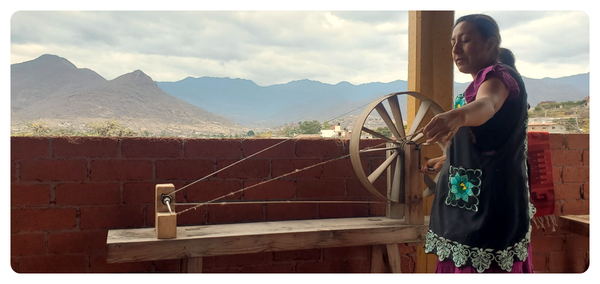
Yet another example includes the saree weavers of Kancheepuram, who meticulously calculate warp and weft to thread together beautiful silk sarees with glistening golden borders. They too are being outpaced by the power loom. As the workforce grows older and fewer youngsters are encouraged to join the profession, there is much to be lost of the rich knowledge around color, dye, design, composition, and motif symbolism. These weaving techniques are not just about economics, they carry the cultural knowledge of regional ecosystems as well as literature and history that goes back several thousands of years.
Current global economic systems do not value or incentivize retaining the critical knowledge that lives in these craft traditions that predate our modern industries. A system of mass production for high profit and low cost fundamentally will not value craft labor in the same way. It is designed not to when it values efficiency and output. So, like the children of Kasimedu’s fishermen, the next generation of weavers too set their sights elsewhere.
Generational knowledge is valuable and is the glue hat keeps intangible heritage traditions alive. Yet in this modern age knowledge and skill alone do not buy a 2BHK flat, a car, on-demand Swiggy deliveries and the luxuries of middle-class life.
And yet...
There is always an “and yet”.
Pamban Island, Ramananthapuram, southern Tamil Nadu.
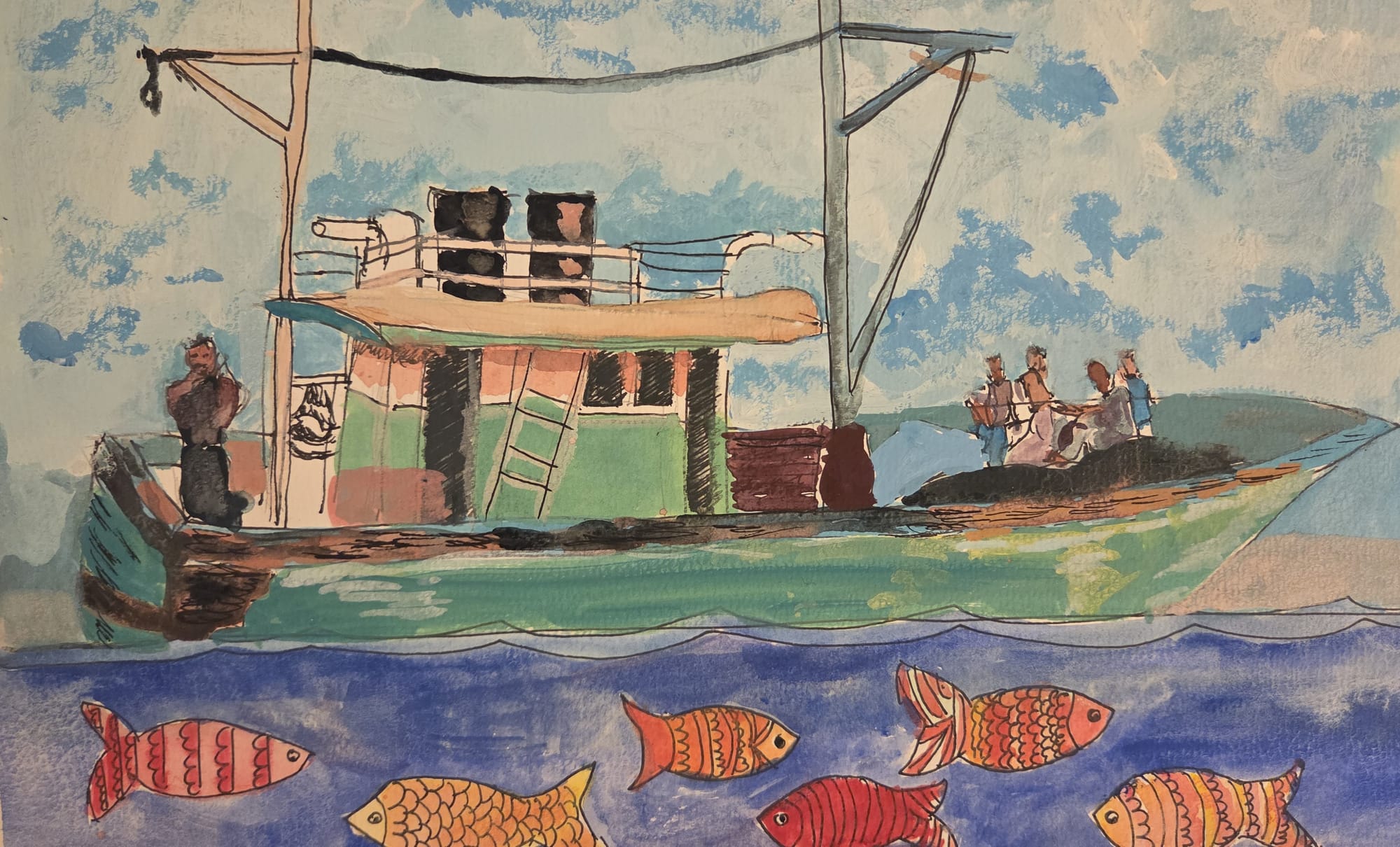
Kadal Osai is a community radio station by and for the fishing community on these island shores. In the tradition of democratized airwaves and people power, the radio station is filling a need. Journalist Kavitha Muralidharan reports brilliantly about how Kadal Osai has engaged local community in her piece “Today We Seek those Fish in Discovery Channel”.
Kadal Osai is run by youth. Most of them don’t actively work out in the waters, toiling with nets and fish, but they are part of the community. There are however a few who do spend shifts out in the salt and spray, then head in to take their radio jockey shift on air. Kadal Osai does many things at once, engages the community in the livelihood and regional fishing economy while highlighting skill development and job readiness for youth.
The station's content is strategic, meant to provide not only entertainment through music, but also information and educational discussion about issues that their community encounters daily. Topics span everything from discussions about climate change to handy home-safety measures such as preventing accidents from LPG supplies in the kitchen. Of course they cover weather reports, news, and relevant information for heading out into the sea as well.
I reached out to Kadal Osai but did not receive a response to speak with them at this time.
The station's strategy is a concrete illustration of how communities design their own solutions and adaptations to the specific challenges people know day to day. In the style of community radio - instead of commerical radio models - Kadal Osai is responsive to both the social needs (entertainment, education etc.) as well as the practical needs (weather reports, ocean conditions, marine ecology etc.) that are relevant to this coastal community's flourishing.
Knowledge and how a community uses it shifts through time. Young people choosing radio creates a figurative social net and there are new skills that will emerge; a keen understanding of their Pamban Island community, strategic communication methods, the technical operations of a radio station - all in service of a traditional maritime economy. These are new layers of knowledge that will join the legacy of amba paatu and rituals for Kadal Amma, albeit with a good chunk of modern technology.
The Seas always Change
Going back to the question posed at the start of this essay:
What did I think about that tension about youth shifting away from family vocations?
At this point, the language of "shifting away” doesn't do justice to the complexities that push and pull people away from their family or community's line of work. It assumes the default is to stay in something even when the economic or social value for that vocation changes and impacts quality of life. Idealistically, we need to value the vocational skills and craft for their knowledge and heritage as well - but practically, quality of life and comfort matter too.
Whether it is the RJs of Kadal Osai serving their community through the radio, or Shankar anna’s son finding a new path in the IT sector, the next generation's choices are individual ones as much as they are colored by upward mobility and economic opportunity.
The tension, I think, comes from a system that undervalues some professions - like skilled labor - and overvalues others both in pay and social status. If we want younger generations to be able to continue their family's heirloom skills - and the rich heritage carried forward through them - then our economic system needs some serious tweaking in values.
Of course, there is also the age old fact that every generation wants change in some way. Change is always uncomfortable and puts the nostalgia of how things used to be on a pedestal to remedy the upset.
Generational shifts, though, are not all that different from the gamble of sailing off into the sea. The trajectory is unknow, maybe turbulent too, but propelled by a healthy hope for a bountiful catch.
Special Credits:
A huge thank you to Madras Inherited, and to leads Ashmitha and Shruthi for leading the Kasimedin Kadhaigalin heritage walk and providing additional resources. Look through some of the articles below to learn more through primary reportage.
Further Reading:
"Today we seek those fish on Discovery Channel" - Kavitha Muralidharan
Kadal Osai FM - Official web presence. Listen to Kadal Osai on Radio Garden.
"Between the City Lords and the Deep Blue Sea" - Divya Karnad
"Traditional Fishers Turn Rescuers in a Win for Declining Marine Wildlife" - M Fathima Hanna, Teresa Scholastica Thomas, I Santhanamari, Vinod M. Kumar, Maria Anthony P., M. Soubadra Devy
This was Issue 5 of Micromoments. If you made it this far, I hope you had some tea with you and found some kernel of a thought, or reflection that came to mind.
This newsletter is one big experiment. I welcome your thoughts, suggestions, reflections and questions/concerns any time. Please feel free to reply to this newsletter. I'll be listening on the other side! - Kamna